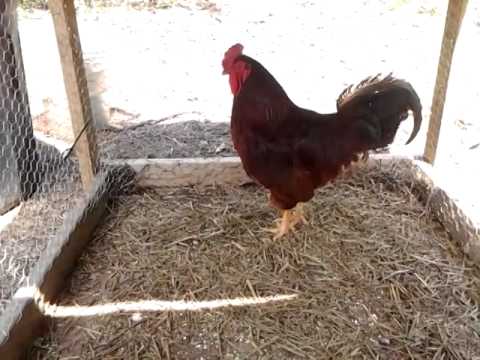
Can Rhode Island Red hens crow?
Rhode Island Red hens are well-known for their striking appearance and excellent egg-laying abilities. However, there is often confusion surrounding their vocal abilities. Many people wonder, can Rhode Island Red hens crow? In this article, we will explore the truth behind this question and debunk any myths surrounding the crowing capabilities of these hens.
Understanding Rhode Island Red hens’ vocal abilities
When it comes to vocalization, chickens are not typically thought of as particularly melodic creatures. However, they do have a range of vocalizations that they use to communicate with each other. Clucking is the most common sound associated with hens, but they are also capable of making other noises, including crowing.
The myth: hens can only cluck, not crow
One common misconception is that hens can only cluck and that crowing is exclusive to roosters. While it is true that roosters are known for their crowing, it is not accurate to say that hens cannot produce similar sounds. In fact, some hens, including Rhode Island Reds, are capable of crowing.
Examining the vocalization patterns of Rhode Island Reds
Rhode Island Red hens have a unique vocalization pattern that sets them apart from other breeds. Alongside their clucking, they can produce a crow-like sound. However, it is important to note that not all Rhode Island Red hens will crow, and the frequency and intensity of their crowing can vary greatly among individuals.
Factors influencing crowing behavior in hens
Several factors can influence the crowing behavior of Rhode Island Red hens. One significant factor is their genetic background, as certain lines of Rhode Island Reds may be more inclined towards crowing. Additionally, environmental factors and social interactions within the flock can also play a role in stimulating crowing behavior.
Examining the genetic background of Rhode Island Reds
Rhode Island Reds are a heritage breed that has been selectively bred for specific traits, including egg production and temperament. While not all Rhode Island Red hens will crow, certain genetic lines may have a predisposition towards crowing due to the influence of their ancestors.
How environmental factors affect crowing in hens
The environment in which Rhode Island Red hens are raised can have an impact on their crowing behavior. Factors such as the presence of other roosters, exposure to loud noises, and the availability of adequate resources can all influence whether a hen will crow or not. A calm and stress-free environment is less likely to trigger crowing behavior in hens.
Do Rhode Island Red hens crow as much as roosters?
Roosters are known for their frequent and loud crowing, which serves as a territorial and dominance display. While some Rhode Island Red hens may crow, it is generally not as frequent or as intense as the crowing exhibited by roosters.
Crowing in hens: a learned behavior or instinctual?
The crowing behavior in Rhode Island Red hens can be seen as a combination of both learned behavior and instinct. While some hens may learn to crow by observing roosters, others may exhibit this behavior naturally due to their genetic predispositions.
The frequency and intensity of crowing in Rhode Island Reds
As mentioned earlier, the frequency and intensity of crowing in Rhode Island Reds can vary greatly among individuals. Some hens may crow occasionally, while others may crow more frequently. The intensity of their crowing can also differ, with some hens producing softer and less distinct crowing sounds compared to roosters.
Comparing crowing characteristics of Rhode Island Reds to other breeds
While Rhode Island Red hens are capable of crowing, it is not exclusive to this breed. Other breeds, such as Sussex and Leghorns, may also exhibit crowing behavior in their hens. However, the frequency and intensity of crowing can vary between different breeds.
Rhode Island Red hens: debunking the crowing myth
In conclusion, Rhode Island Red hens are indeed capable of crowing, contrary to the popular belief that only roosters can produce this sound. While not all Rhode Island Red hens will crow, those that do exhibit this behavior showcase the versatility and complexity of vocalization in chickens. Understanding the factors influencing crowing behavior, such as genetic background and environmental factors, can provide valuable insights into the vocal capabilities of Rhode Island Red hens and help debunk the myth that hens can only cluck, not crow.