
Selling a Car in Rhode Island: A Step-by-Step Guide
Determine the Market Value of Your Car
Before selling your car in Rhode Island, it is important to determine its market value. This can be done by researching similar makes, models, and years of vehicles in your area. Online resources such as Kelley Blue Book or NADA Guides can provide a good starting point for estimating the value. Factors such as the car’s condition, mileage, and any additional features should be taken into consideration when determining the market value.
Gather All the Necessary Documentation
To sell a car in Rhode Island, you will need to gather all the necessary documentation. This includes the car’s title, which must be in your name and free of any liens. Make sure to locate the title before proceeding with the sale. Additionally, you will need a bill of sale, which serves as a legal document and outlines the terms of the sale. Finally, gather any maintenance records or service history documents that may add value to your car and provide potential buyers with confidence in its condition.
Prepare Your Car for Sale
Preparing your car for sale is an important step to attract potential buyers and achieve a higher selling price. Start by thoroughly cleaning both the interior and exterior of the car. Removing personal belongings and giving it a fresh look will make a positive first impression. Additionally, consider getting any necessary repairs or maintenance tasks done to ensure your car is in good working condition. A well-maintained and clean car is more likely to appeal to buyers and fetch a better price.
Advertise Your Car Effectively
To sell your car in Rhode Island, it is crucial to advertise it effectively. Take high-quality photographs from various angles to showcase the car’s features. Write a detailed and honest description of the vehicle, highlighting its key selling points and any recent maintenance or upgrades. Utilize online platforms such as classified ads websites, social media, and local newspapers to reach a wider audience. Don’t forget to include your contact information for interested buyers to reach out to you easily.
Negotiate with Potential Buyers
When potential buyers show interest in your car, be prepared to negotiate the price. Determine the lowest price you are willing to accept and be open to reasonable offers. It is important to remain firm but also flexible during negotiations. Consider conducting research on the fair market value of your car to ensure you are asking for a reasonable price. Be honest about the car’s condition and any known issues to build trust with the buyer.
Complete the Required Paperwork
Once you have agreed on a final selling price, it is time to complete the required paperwork. Fill out the bill of sale with all relevant information, including the buyer and seller’s names, addresses, and signatures. Make copies of the signed bill of sale for both parties. Additionally, be sure to provide the buyer with any necessary documents, such as the car’s maintenance records or a vehicle history report, to further instill confidence in the purchase.
Transfer the Title to the New Owner
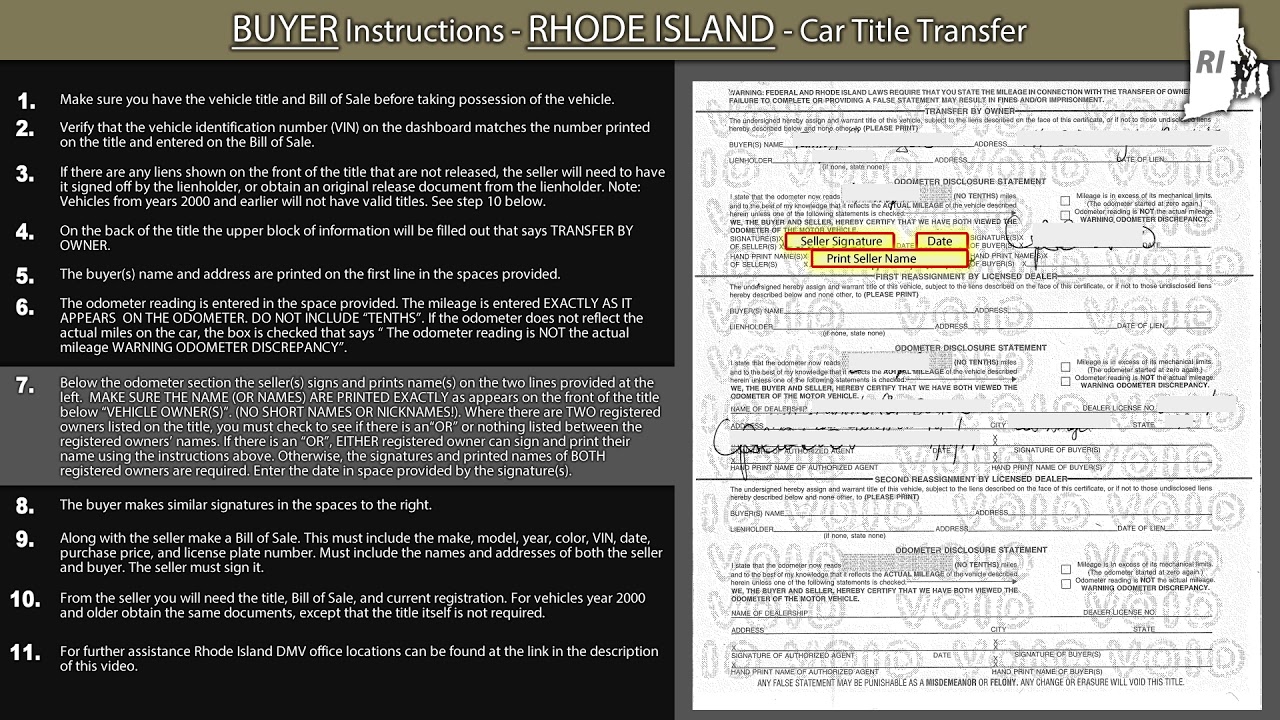
To legally transfer ownership of the car to the new owner in Rhode Island, you must sign over the title. Fill out the necessary sections on the back of the title, including the buyer’s name and address, the date of sale, and the purchase price. Both parties should sign and date the title. Make sure the buyer understands that they will need to complete their portion of the title transfer process after the sale is completed.
Cancel Your Registration and License Plates
After selling your car in Rhode Island, it is important to cancel your registration and surrender your license plates. This can be done by visiting your local Division of Motor Vehicles office or by mailing the necessary documents. Provide the DMV with the bill of sale and any other required documentation. This will officially notify the DMV that you are no longer the owner of the vehicle and prevent any future liabilities associated with the car.
Settle Any Outstanding Liens on the Vehicle
If there are any outstanding liens on your car, it is crucial to settle them before selling the vehicle. Contact the lienholder and coordinate the necessary steps to release the lien. This may involve paying off the remaining loan balance or obtaining a lien release letter from the lienholder. By settling any outstanding liens, you ensure a smooth transfer of ownership to the new owner and avoid any legal complications.
Notify the Rhode Island Division of Motor Vehicles
To protect yourself as the seller, it is advisable to notify the Rhode Island Division of Motor Vehicles about the sale of your car. This can be done by completing a Notice of Transfer and Release of Liability form, which can be obtained from the DMV website or office. By submitting this form, you inform the DMV that you are no longer responsible for the vehicle and any subsequent issues or violations that may arise.
Keep a Record of the Sale for Your Files
Lastly, it is important to keep a record of the sale for your files. Make copies of all relevant documentation, including the bill of sale, title transfer, and any other communications with the buyer. This will help you in case of any future disputes or legal issues. It is also recommended to keep a record of the buyer’s contact information for reference. Storing these documents in a safe and easily accessible place will facilitate any future reference needs.


